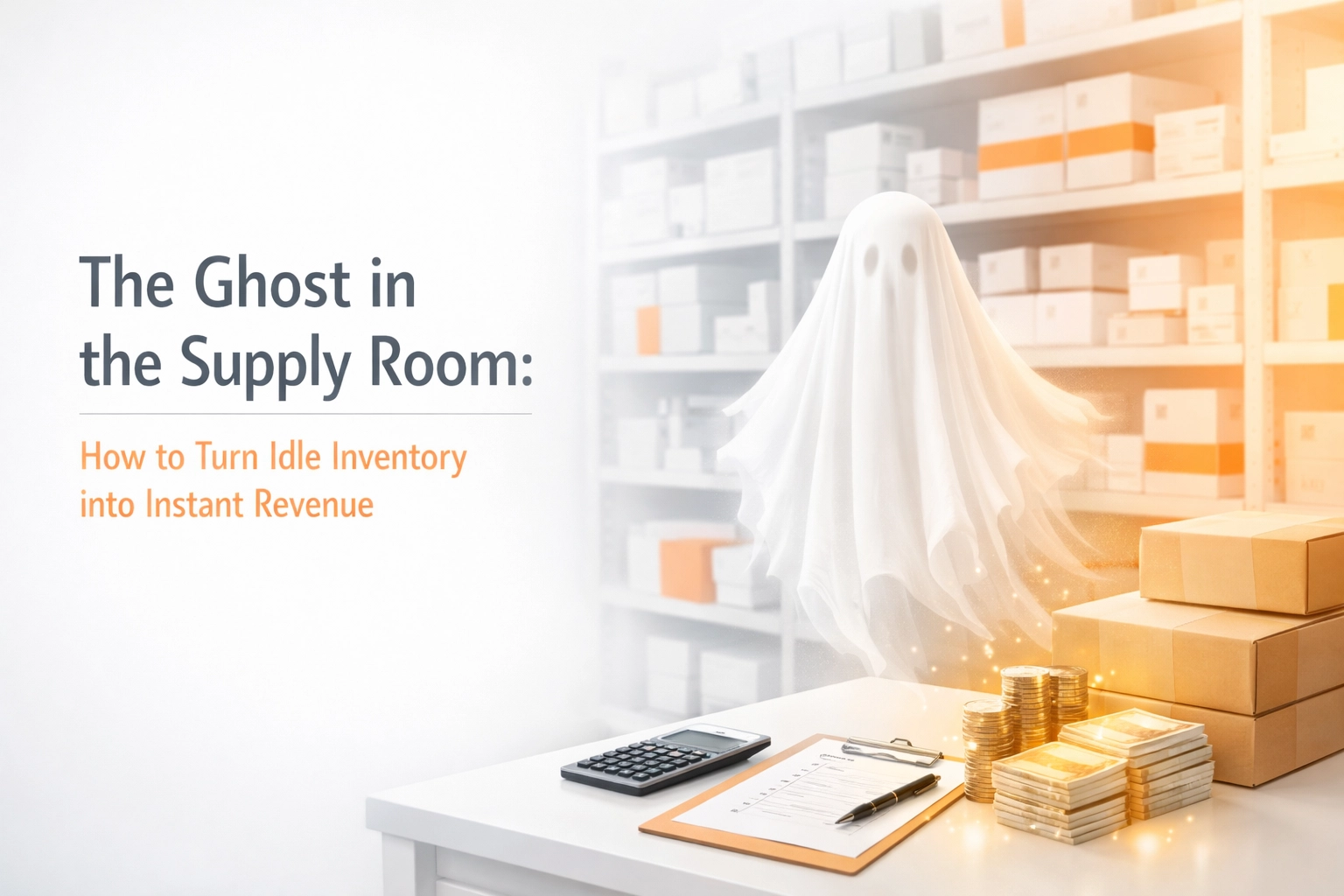
Let's talk about something that's probably haunting your supply room right now: thousands of dollars' worth of perfectly good surgical supplies just sitting there, gathering dust, taking up valuable shelf space, and slowly creeping toward their expiration dates.
We're talking about LigaSure devices from that vendor contract you switched out of six months ago. The Harmonic scalpel handpieces that your new surgeon prefers not to use. The boxes of surgical staplers that got over-ordered during a buying spree that seemed like a good idea at the time.
This is what we call "ghost inventory", and it's silently draining your budget while you're busy managing everything else.
What Exactly is Ghost Inventory?
Ghost inventory isn't technically invisible, but it might as well be. These are the items in your supply room that fall into one of these categories:
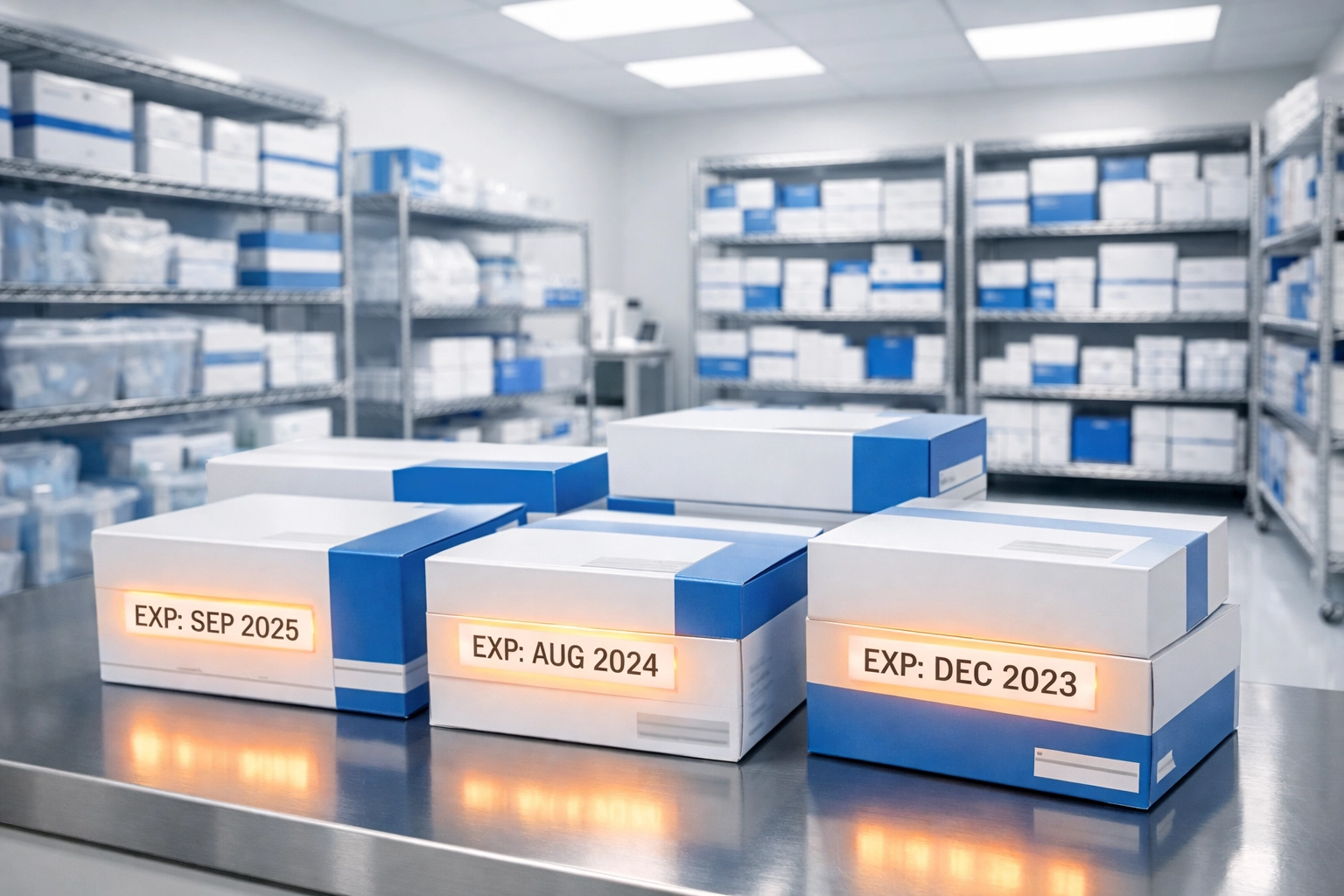
Nearing Expiration: Surgical supplies with 6-12 months of shelf life left that you know won't get used in time.
Surgeon Preference Changes: When Dr. Smith retires or a new attending joins who prefers different devices, you're left with surplus equipment that's perfectly functional but won't see OR time.
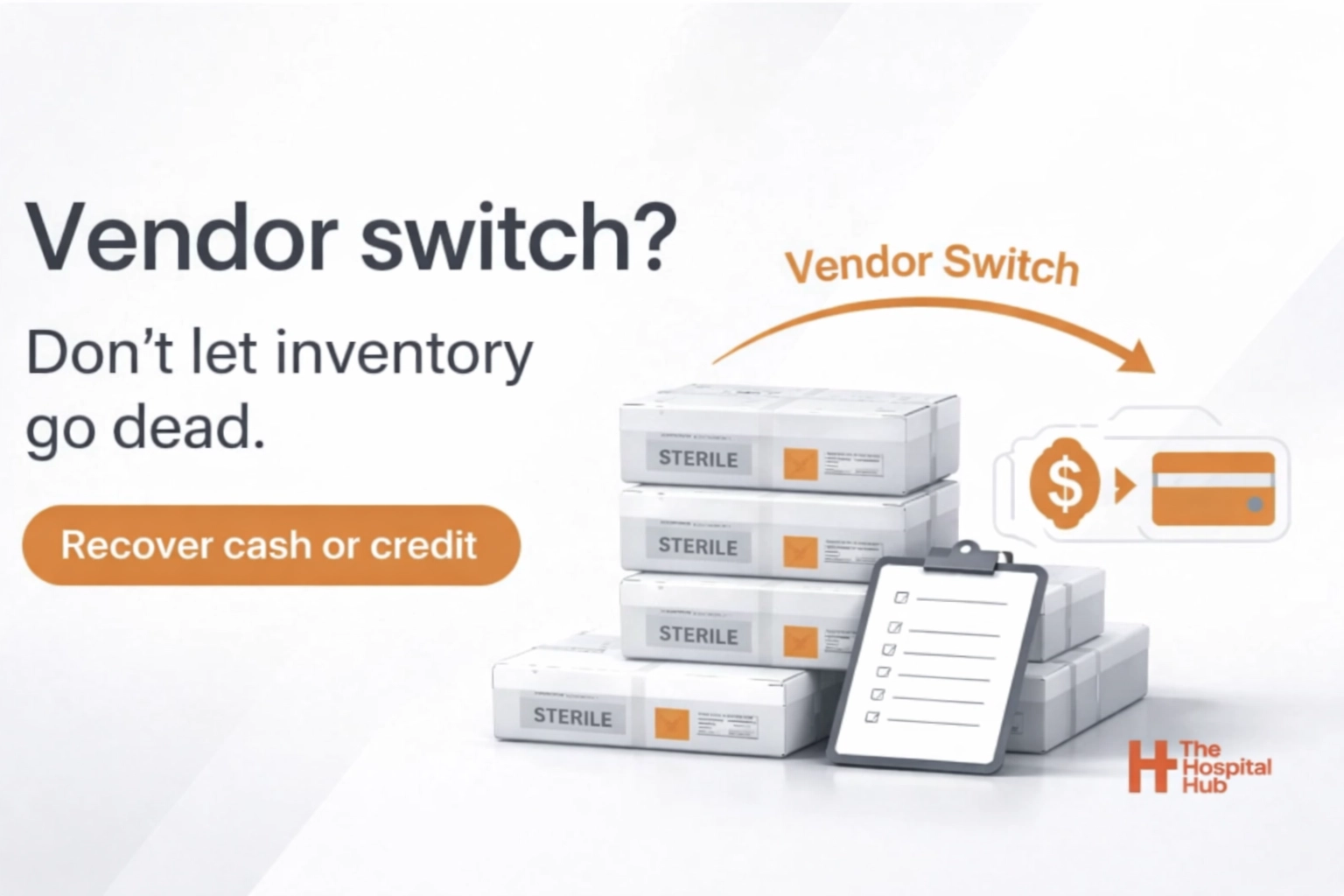
Vendor Switches: Contract changes mean yesterday's go-to devices become today's excess inventory.
Over-Ordering Mistakes: We've all been there. Someone panic-ordered during a supply scare, or there was a miscommunication about case volume, and now you've got more than you'll ever need.
Discontinued Lines: Manufacturers phase out product lines, leaving you with functional inventory that's no longer part of your active formulary.
The problem? All of these items represent real money, money that's just sitting there doing absolutely nothing for your facility.
The Hidden Cost of Doing Nothing
Here's the uncomfortable math: if you have $50,000 worth of unused surgical devices supplier inventory sitting in your supply room (and many facilities have way more than that), you're essentially letting that capital collect dust instead of putting it to work.
But it gets worse. You're also paying for:
- Storage space that could be used for active inventory
- Staff time managing and counting products that won't get used
- Insurance on inventory that's depreciating
- Eventual disposal costs when items expire
And if you're a sustainability-minded facility (and let's be honest, who isn't these days?), there's another cost that's harder to quantify: the environmental impact of letting perfectly good medical equipment end up in a landfill.
The Environmental Case for Surplus Markets
The medical waste crisis is real. Healthcare facilities in the U.S. generate over 5 million tons of waste annually, and a significant portion of that is unused or barely-used medical supplies and devices.
When functional surgical supplies online end up in landfills because they hit their expiration date or couldn't find a buyer in time, it's a loss on multiple fronts:
Resource Waste: The energy, materials, and manufacturing processes that went into creating these precision instruments are completely wasted.
Landfill Impact: Medical device packaging and plastics can take hundreds of years to decompose.
Carbon Footprint: Manufacturing replacement devices creates additional emissions when existing inventory could have been utilized.
The medical surplus market exists to break this cycle. By creating a secondary market for excess inventory, we keep functional equipment in circulation, reduce waste, and support sustainability goals without compromising on quality or safety.
Think of it as the circular economy applied to healthcare, products get a second life instead of becoming tomorrow's trash.
Turning Your Ghost Inventory Into Cash (or Credit)
Here's where things get interesting. That ghost inventory? It still has real value to someone.
At The Hospital Hub, our Surplus Buying Program is specifically designed to help facilities like yours recover value from unused or excess surgical supplies. Here's how it works:
Step 1: Identify Your Surplus
Walk through your supply room and pull items that fit the ghost inventory profile. Focus on:
- Sealed, unopened items in original packaging
- Items with at least 6 months until expiration
- Name-brand surgical devices (LigaSure, Harmonic, Enseal, surgical staplers, etc.)
- Products you're confident won't be used before expiration
Step 2: Get a Quote
Snap some photos or send us a list of what you've got. Our team evaluates items based on current market demand, condition, and expiration dating. You'll get a straightforward quote, no games, no gotchas.
Step 3: Choose Cash or HubPoints
Here's where it gets flexible. You can either:
- Take payment as cash (direct deposit, check, whatever works)
- Convert to HubPoints (our loyalty currency) for additional purchasing power on future orders
Step 4: We Handle Logistics
We coordinate pickup or provide shipping labels. You don't have to figure out how to pack and ship medical devices, we've got systems for that.
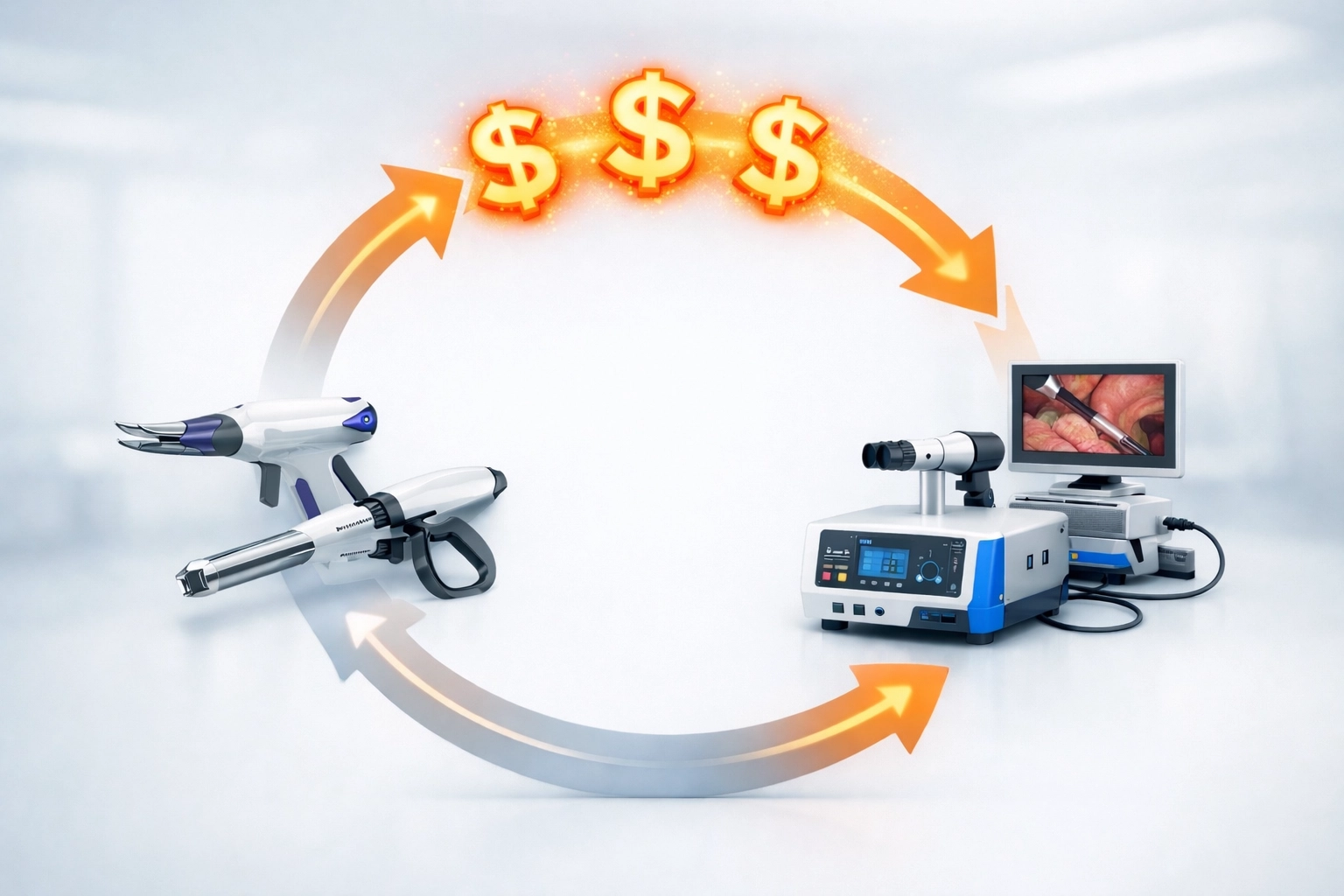
The Smarter Sourcing Loop: Sell, Save, Repeat
This is where the real magic happens. When you sell surplus medical equipment to us and convert it to HubPoints, you're not just clearing space, you're creating a self-sustaining cycle that actually improves your supply chain efficiency.
Here's the loop:
- Sell us your surplus → Recover 40-60% of original value (way better than writing it off as a loss)
- Earn HubPoints → Get even more purchasing power than cash alone
- Buy what you actually need → Use those HubPoints plus our already-discounted pricing (we're talking 50%+ off retail on many items)
- Enjoy automatic perks → All orders ship expedited at no extra cost, so you get devices faster
- Repeat as needed → As your formulary changes, keep the cycle going
Let's put real numbers to this. Say you sell us $10,000 worth of excess LigaSure handpieces. You might get:
- $6,000 in cash, OR
- $7,500 in HubPoints (we typically offer a bonus for choosing points)
Now you take those HubPoints to buy the Harmonic devices your surgeons actually prefer. Between our competitive pricing and your HubPoints, what would have cost you $15,000 retail might only run you $5,000 out of pocket.
That's a net swing from -$10,000 (ghost inventory loss) to -$5,000 actual cost. You just saved $5,000 while upgrading to better-fit inventory.
Real-World Applications
This isn't theoretical. We work with ASCs, hospital systems, and group purchasing organizations across the country who are actively managing their inventory this way.
Scenario 1: The Surgeon Switcheroo
A 4-OR ASC hired a new orthopedic surgeon who only uses Harmonic technology. They had $18,000 in LigaSure inventory left over from their previous surgeon. They sold it to us for HubPoints, then used those points plus our discount pricing to stock up on exactly what the new surgeon needed, and pocketed the difference.
Scenario 2: The Contract Flip
A hospital system switched GPO contracts and suddenly had 6 months of the "old" vendor's advanced energy devices sitting around. Rather than let them expire, they offloaded the surplus to us, recovered capital, and reinvested it into devices from their new preferred vendor.
Scenario 3: The Over-Order Oops
A multi-specialty clinic accidentally ordered a year's worth of surgical staplers instead of a quarter's worth (hey, it happens). They sold us the excess before expiration, banked HubPoints, and now use those points to fill gaps in other supply categories throughout the year.
Getting Started Is Easier Than You Think
If you're sitting there thinking, "This sounds great, but I don't have time to coordinate all this," here's the good news: the process is stupidly simple.
You don't need to become an expert in medical surplus markets or negotiate like you're on Shark Tank. Just visit our Sell to Us page, fill out a quick form with what you've got, and we'll take it from there.
Our team does this every day. We know which items move fast, what the market looks like, and how to get you the best possible value for your surplus. You focus on patient care: we'll focus on turning your ghost inventory into actual revenue.
The Bottom Line
Every dollar tied up in ghost inventory is a dollar that could be working for you. Whether it's funding new equipment purchases, offsetting budget shortfalls, or just cleaning up your supply room so your team can actually find what they need, there's real value in addressing surplus proactively.
Plus, you're keeping functional medical devices out of landfills and supporting a more sustainable approach to healthcare supply chain management. That's a win for your budget and a win for the planet.
So take a look around your supply room. What's haunting your shelves right now? Whatever it is, there's probably someone out there who needs it: and we can connect the dots.
Ready to exorcise those ghosts? Head over to The Hospital Hub and let's start the conversation. Your idle inventory is ready for its second act.
Let's talk about something that's probably haunting your supply room right now: thousands of dollars' worth of perfectly good surgical supplies just sitting there, gathering dust, taking up valuable shelf space, and slowly creeping toward their expiration dates.
We're talking about LigaSure devices from that vendor contract you switched out of six months ago. The Harmonic scalpel handpieces that your new surgeon prefers not to use. The boxes of surgical staplers that got over-ordered during a buying spree that seemed like a good idea at the time.
This is what we call "ghost inventory", and it's silently draining your budget while you're busy managing everything else.
What Exactly is Ghost Inventory?
Ghost inventory isn't technically invisible, but it might as well be. These are the items in your supply room that fall into one of these categories:
Nearing Expiration: Surgical supplies with 6-12 months of shelf life left that you know won't get used in time.
Surgeon Preference Changes: When Dr. Smith retires or a new attending joins who prefers different devices, you're left with surplus equipment that's perfectly functional but won't see OR time.
Vendor Switches: Contract changes mean yesterday's go-to devices become today's excess inventory.
Over-Ordering Mistakes: We've all been there. Someone panic-ordered during a supply scare, or there was a miscommunication about case volume, and now you've got more than you'll ever need.
Discontinued Lines: Manufacturers phase out product lines, leaving you with functional inventory that's no longer part of your active formulary.
The problem? All of these items represent real money, money that's just sitting there doing absolutely nothing for your facility.
The Hidden Cost of Doing Nothing
Here's the uncomfortable math: if you have $50,000 worth of unused surgical devices supplier inventory sitting in your supply room (and many facilities have way more than that), you're essentially letting that capital collect dust instead of putting it to work.
But it gets worse. You're also paying for:
- Storage space that could be used for active inventory
- Staff time managing and counting products that won't get used
- Insurance on inventory that's depreciating
- Eventual disposal costs when items expire
And if you're a sustainability-minded facility (and let's be honest, who isn't these days?), there's another cost that's harder to quantify: the environmental impact of letting perfectly good medical equipment end up in a landfill.
The Environmental Case for Surplus Markets
The medical waste crisis is real. Healthcare facilities in the U.S. generate over 5 million tons of waste annually, and a significant portion of that is unused or barely-used medical supplies and devices.
When functional surgical supplies online end up in landfills because they hit their expiration date or couldn't find a buyer in time, it's a loss on multiple fronts:
Resource Waste: The energy, materials, and manufacturing processes that went into creating these precision instruments are completely wasted.
Landfill Impact: Medical device packaging and plastics can take hundreds of years to decompose.
Carbon Footprint: Manufacturing replacement devices creates additional emissions when existing inventory could have been utilized.
The medical surplus market exists to break this cycle. By creating a secondary market for excess inventory, we keep functional equipment in circulation, reduce waste, and support sustainability goals without compromising on quality or safety.
Think of it as the circular economy applied to healthcare, products get a second life instead of becoming tomorrow's trash.
Turning Your Ghost Inventory Into Cash (or Credit)
Here's where things get interesting. That ghost inventory? It still has real value to someone.
At The Hospital Hub, our Surplus Buying Program is specifically designed to help facilities like yours recover value from unused or excess surgical supplies. Here's how it works:
Step 1: Identify Your Surplus
Walk through your supply room and pull items that fit the ghost inventory profile. Focus on:
- Sealed, unopened items in original packaging
- Items with at least 6 months until expiration
- Name-brand surgical devices (LigaSure, Harmonic, Enseal, surgical staplers, etc.)
- Products you're confident won't be used before expiration
Step 2: Get a Quote
Snap some photos or send us a list of what you've got. Our team evaluates items based on current market demand, condition, and expiration dating. You'll get a straightforward quote, no games, no gotchas.
Step 3: Choose Cash or HubPoints
Here's where it gets flexible. You can either:
- Take payment as cash (direct deposit, check, whatever works)
- Convert to HubPoints (our loyalty currency) for additional purchasing power on future orders
Step 4: We Handle Logistics
We coordinate pickup or provide shipping labels. You don't have to figure out how to pack and ship medical devices, we've got systems for that.
The Smarter Sourcing Loop: Sell, Save, Repeat
This is where the real magic happens. When you sell surplus medical equipment to us and convert it to HubPoints, you're not just clearing space, you're creating a self-sustaining cycle that actually improves your supply chain efficiency.
Here's the loop:
- Sell us your surplus → Recover 40-60% of original value (way better than writing it off as a loss)
- Earn HubPoints → Get even more purchasing power than cash alone
- Buy what you actually need → Use those HubPoints plus our already-discounted pricing (we're talking 50%+ off retail on many items)
- Enjoy automatic perks → All orders ship expedited at no extra cost, so you get devices faster
- Repeat as needed → As your formulary changes, keep the cycle going
Let's put real numbers to this. Say you sell us $10,000 worth of excess LigaSure handpieces. You might get:
- $6,000 in cash, OR
- $7,500 in HubPoints (we typically offer a bonus for choosing points)
Now you take those HubPoints to buy the Harmonic devices your surgeons actually prefer. Between our competitive pricing and your HubPoints, what would have cost you $15,000 retail might only run you $5,000 out of pocket.
That's a net swing from -$10,000 (ghost inventory loss) to -$5,000 actual cost. You just saved $5,000 while upgrading to better-fit inventory.
Real-World Applications
This isn't theoretical. We work with ASCs, hospital systems, and group purchasing organizations across the country who are actively managing their inventory this way.
Scenario 1: The Surgeon Switcheroo
A 4-OR ASC hired a new orthopedic surgeon who only uses Harmonic technology. They had $18,000 in LigaSure inventory left over from their previous surgeon. They sold it to us for HubPoints, then used those points plus our discount pricing to stock up on exactly what the new surgeon needed, and pocketed the difference.
Scenario 2: The Contract Flip
A hospital system switched GPO contracts and suddenly had 6 months of the "old" vendor's advanced energy devices sitting around. Rather than let them expire, they offloaded the surplus to us, recovered capital, and reinvested it into devices from their new preferred vendor.
Scenario 3: The Over-Order Oops
A multi-specialty clinic accidentally ordered a year's worth of surgical staplers instead of a quarter's worth (hey, it happens). They sold us the excess before expiration, banked HubPoints, and now use those points to fill gaps in other supply categories throughout the year.
Getting Started Is Easier Than You Think
If you're sitting there thinking, "This sounds great, but I don't have time to coordinate all this," here's the good news: the process is stupidly simple.
You don't need to become an expert in medical surplus markets or negotiate like you're on Shark Tank. Just visit our Sell to Us page, fill out a quick form with what you've got, and we'll take it from there.
Our team does this every day. We know which items move fast, what the market looks like, and how to get you the best possible value for your surplus. You focus on patient care: we'll focus on turning your ghost inventory into actual revenue.
The Bottom Line
Every dollar tied up in ghost inventory is a dollar that could be working for you. Whether it's funding new equipment purchases, offsetting budget shortfalls, or just cleaning up your supply room so your team can actually find what they need, there's real value in addressing surplus proactively.
Plus, you're keeping functional medical devices out of landfills and supporting a more sustainable approach to healthcare supply chain management. That's a win for your budget and a win for the planet.
So take a look around your supply room. What's haunting your shelves right now? Whatever it is, there's probably someone out there who needs it: and we can connect the dots.
Ready to exorcise those ghosts? Head over to The Hospital Hub and let's start the conversation. Your idle inventory is ready for its second act.
You can edit text on your website by double clicking on a text box on your website. Alternatively, when you select a text box a settings menu will appear. your website by double clicking on a text box on your website. Alternatively, when you select a text box.