

BLOG
GPOs Are an Important Part of Hospital Purchasing— But They Aren’t the Whole Picture

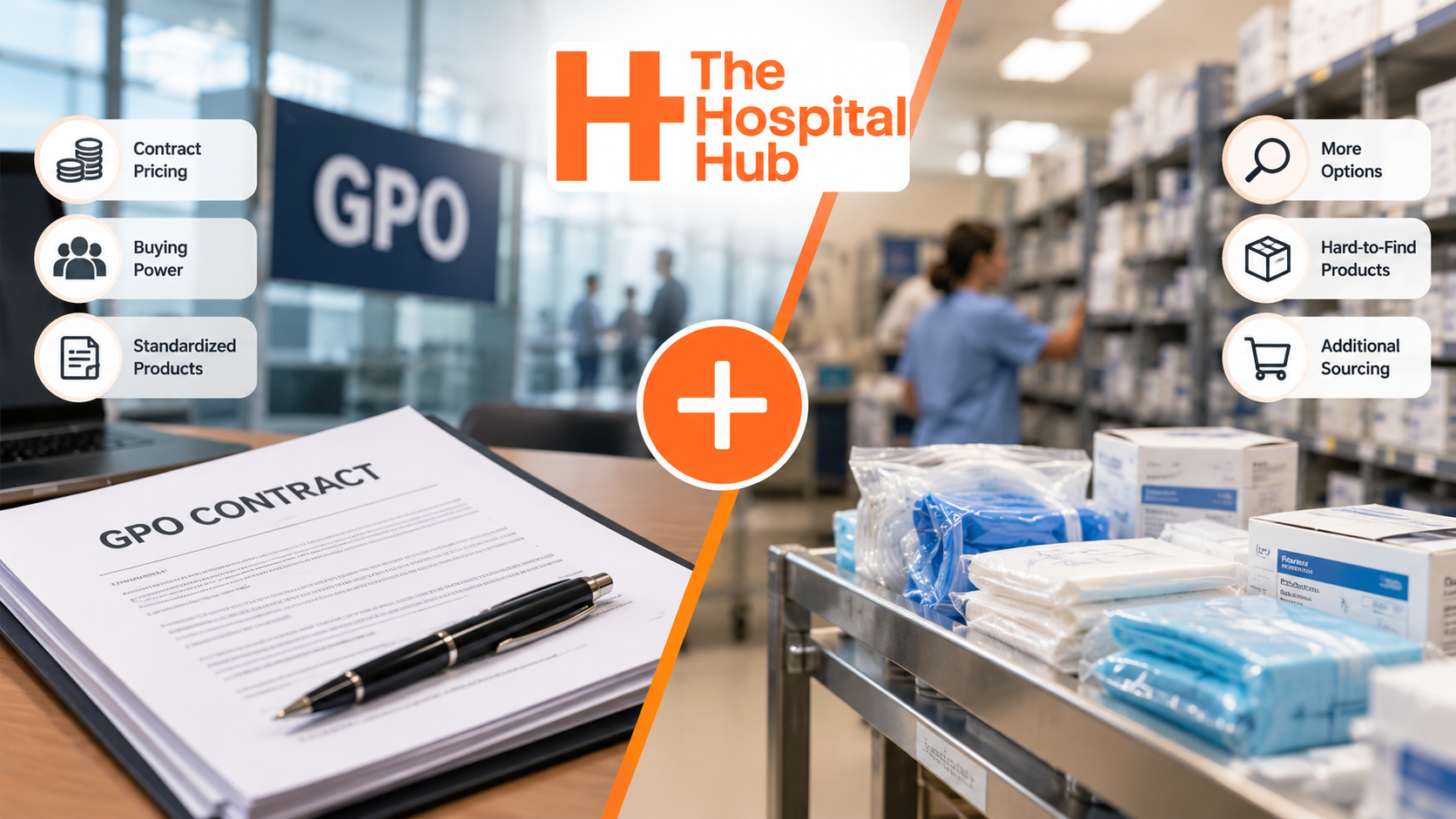
Group Purchasing Organizations (GPOs) have become a standard part of healthcare procurement, helping hospitals leverage their collective purchasing power to negotiate pricing and contract terms with manufacturers, distributors, and suppliers. For healthcare organizations managing thousands of products across multiple departments, the advantages are easy to understand: GPOs can simplify purchasing, establish supplier relationships, support standardization, and provide access to negotiated pricing.
There is, however, a downside to treating any single purchasing channel as the answer to every sourcing need. Hospital procurement is rarely that predictable. Product availability changes, manufacturers experience shortages and backorders, physician preferences evolve, and purchasing teams regularly encounter products that are difficult to locate through their usual channels.
That’s why The Hospital Hub isn’t designed to compete with the GPO model. Instead, it gives healthcare organizations another resource to incorporate into a broader, more flexible sourcing strategy.
Why GPOs Play Such a Large Role in Hospital Purchasing
The Centers for Medicare & Medicaid Services defines a GPO as an organization that purchases, arranges for, or negotiates the purchase of medical products and supplies on behalf of a group of healthcare entities. GPOs have become deeply embedded in hospital procurement because they allow healthcare organizations to leverage their collective purchasing power rather than negotiate every supplier relationship independently.
For frequently purchased products and large purchasing categories, that structure can create valuable efficiencies. Hospitals can rely on established supplier relationships rather than independently negotiating every purchase, while procurement teams can manage a more standardized purchasing process across departments and facilities.
The challenge arises when the normal purchasing process doesn’t match the immediate needs of the hospital.
When Traditional Purchasing Channels Come Up Short
Healthcare procurement teams know how quickly a routine purchase can turn into a sourcing challenge. A product that was readily available last month may suddenly be on backorder. A department may need a particular size or model that isn’t available through its normal supplier. A manufacturer may discontinue a familiar product, or unexpected demand may make certain supplies harder to locate.
These aren’t unusual exceptions; they’re part of managing a complex healthcare supply chain.
This is where relying too heavily on one purchasing channel can become limiting. Even when that channel works extremely well for the majority of purchases, procurement teams benefit from knowing what other resources are available when circumstances change.
The Value of Having Another Place to Look
The Hospital Hub gives healthcare buyers another place to search for medical and surgical products without asking them to abandon the purchasing relationships they already use.
A hospital can have a strong GPO relationship, established distributors, direct manufacturer relationships, and additional sourcing resources at the same time. Each serves a different purpose within the larger procurement strategy.
The Hospital Hub adds another layer of visibility to that process. Purchasing teams can browse medical and surgical supplies through The Hospital Hub when they’re researching a product, looking for a difficult-to-find item, exploring availability, or simply expanding the resources available to their procurement department.
That additional visibility is important because purchasing decisions aren’t based on price alone. Availability, lead time, quantity, product specifications, supplier reliability, and continuity of supply can all influence what constitutes a good purchasing decision.
Building a More Resilient Procurement Strategy
Healthcare supply chains have faced significant disruption in recent years, reinforcing the importance of having multiple ways to respond when normal purchasing patterns are interrupted. Supply chain resiliency has also become a priority within the GPO model itself, with organizations such as Pandion emphasizing supplier redundancy, manufacturing resiliency, and broader sourcing strategies as part of their approach to healthcare purchasing.
This doesn’t diminish the role of the GPO. In many organizations, the GPO will continue to serve as one of the primary foundations of the purchasing strategy. The same is true of major distributors and direct manufacturer relationships.
The opportunity is to build around those relationships rather than depend exclusively on them.
A broader sourcing network gives procurement teams somewhere else to turn when a product is difficult to locate, availability changes, or the normal purchasing process isn’t meeting an immediate need. Instead of beginning the search for an alternative resource after a problem occurs, hospitals can already have additional sourcing channels on their radar.
Where The Hospital Hub Fits
The Hospital Hub was created to be one of those resources.
Our marketplace gives healthcare organizations another way to discover and source medical and surgical supplies while continuing to work within the procurement infrastructure they already have in place. We’re not suggesting that hospitals replace their GPOs, distributors, or manufacturer relationships. We’re giving purchasing teams another place to look.
That distinction is important. A resilient procurement strategy isn’t necessarily about choosing one purchasing model over another. It’s about having access to multiple resources and understanding how each can support the organization.
Your GPO can provide collective purchasing power and established contracts. Your distributors can provide logistics, scale, and broad product access. Manufacturers can provide direct product expertise and established supply relationships. The Hospital Hub can complement those resources by providing another marketplace for healthcare products.
More Resources, More Visibility
Hospital purchasing will continue to be complex. Supply disruptions will happen, products will become difficult to locate, clinical needs will change, and procurement teams will continue balancing cost, availability, quality, and reliability.
GPOs remain an important part of that equation, but they don’t have to be the only resource a purchasing team knows how to use.
By expanding the number of sourcing resources available to your organization, you can create greater visibility into the market and give your procurement team another option when the usual path doesn’t provide what you need.
The Hospital Hub is built to be part of that broader sourcing network. Healthcare buyers can shop medical and surgical supplies through The Hospital Hub and add another resource to the relationships and purchasing channels they already rely on.
In healthcare procurement, you may not always know where the next supply challenge will come from. But you can make sure your team has more than one place to look when it does.