As hospitals and ambulatory surgery centers head into the final months of the year, budgets, inventory levels, purchasing plans, and year-end counts all come into sharper focus.
It is also the perfect time to ask one important question:
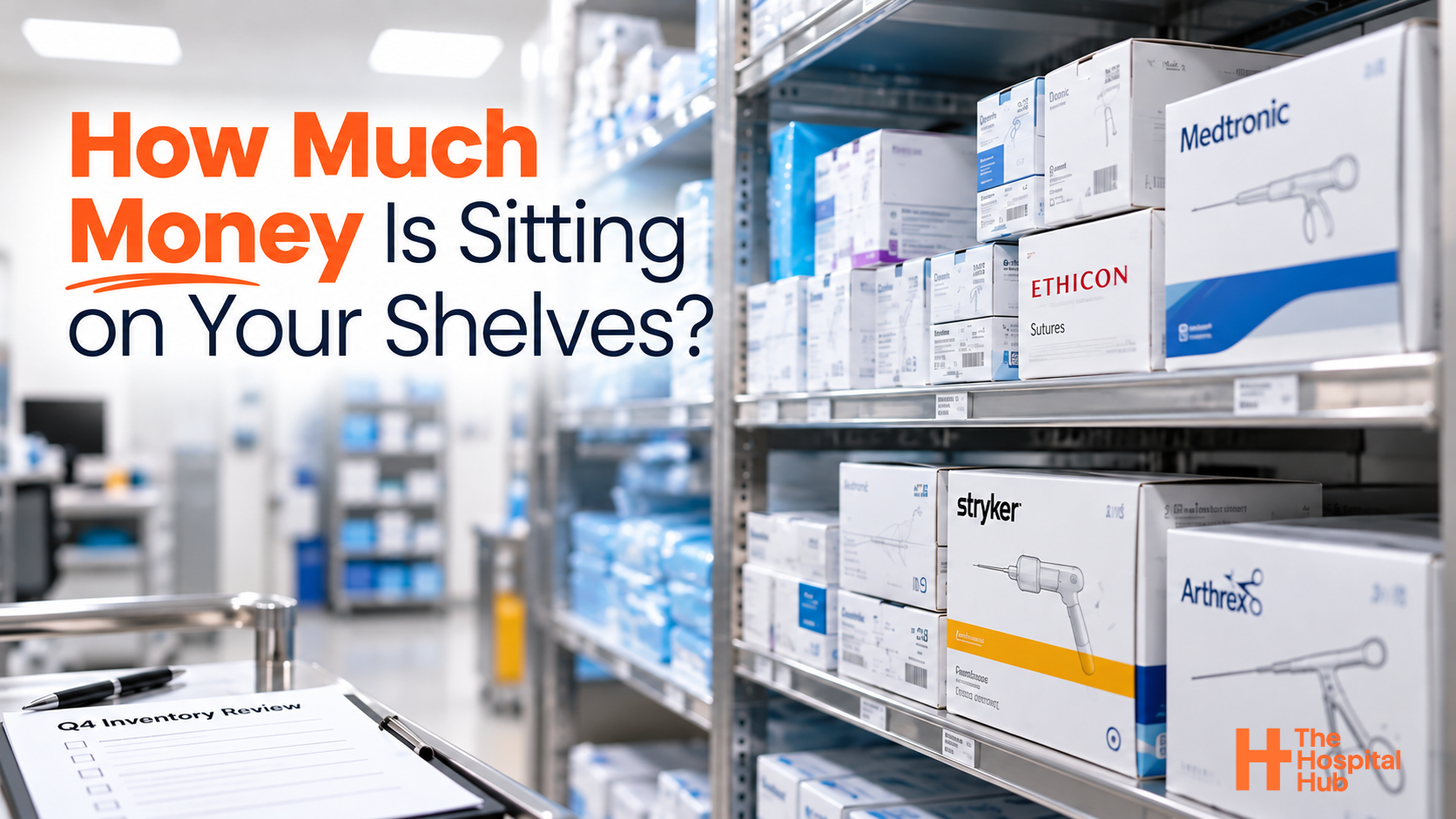
How much money is sitting on your shelves in surgical supplies you are unlikely to use?
Excess surgical inventory can build slowly. A surgeon leaves. A procedure changes. A new contract is signed. A preference card gets updated. Someone orders a little extra “just in case.”
Before long, thousands of dollars in perfectly usable, in-date surgical supplies may be sitting in a supply room with no clear path back into patient care.
And the longer they sit, the less valuable they become.
Recent research on operating room procurement has identified surgical supplies, medical devices, inventory management, and purchasing practices as important opportunities for both economic and environmental sustainability. In other words, managing what is already on the shelf matters just as much as negotiating what comes through the door.
Before 2027 arrives, here are seven areas worth reviewing.
Why Q4 Is the Right Time to Review Excess Surgical Inventory
Year-end inventory is usually about determining what you have.
It should also be about determining what you actually need.
Those are not necessarily the same thing.
An item can be unopened, in date, and perfectly usable while still having little chance of ever being used at your facility. Holding onto it does not recover the original investment. In many cases, it simply starts a countdown toward expiration.
Instead of waiting until products are too close to expiration—or already expired—Q4 is an opportunity to identify excess surgical inventory while there is still time to recover value from it.
1. Look at Supplies Connected to Physicians Who Have Left
Physician turnover can leave a surprisingly expensive footprint in the supply room.
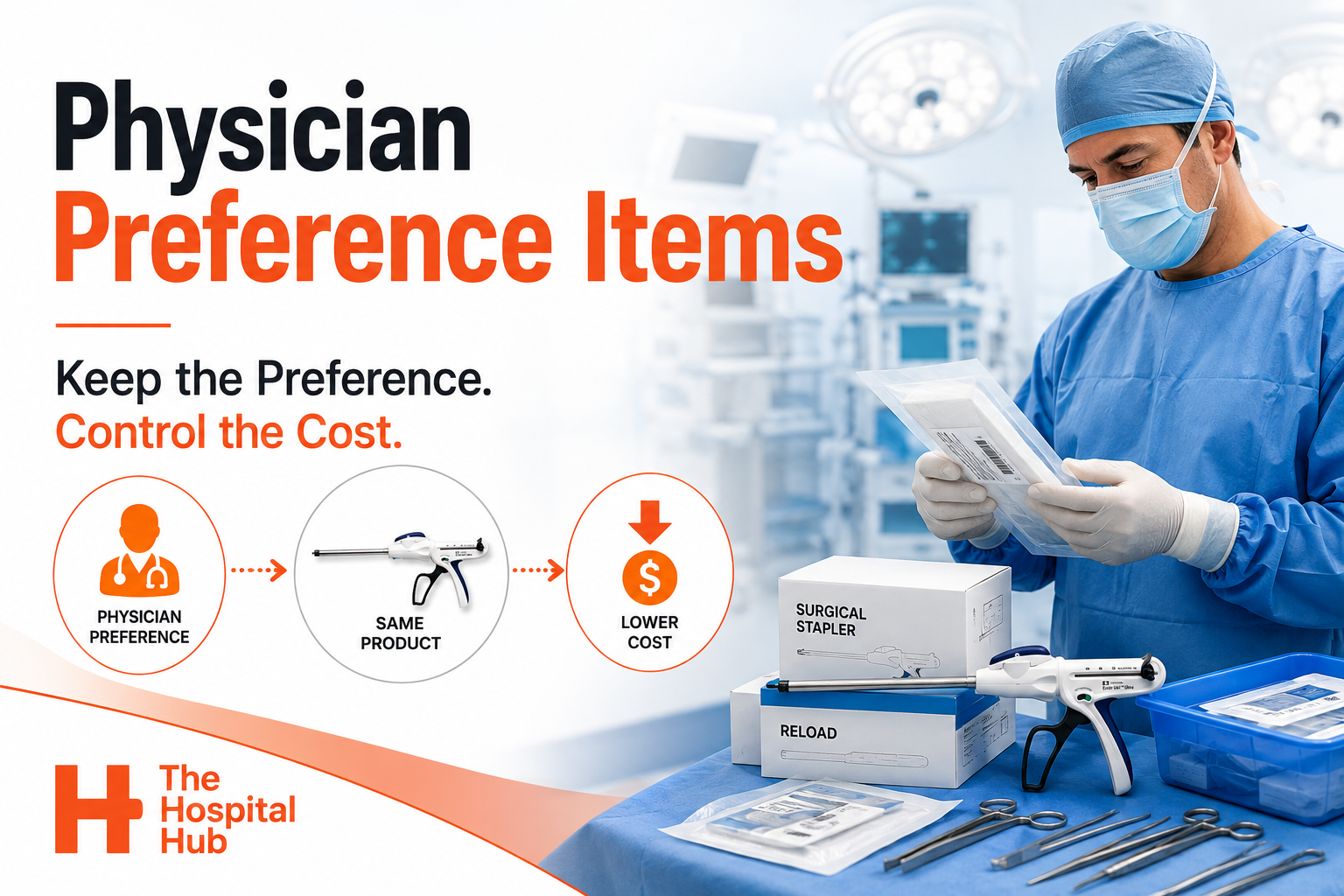
Surgeons frequently have specific preferences for staplers, energy devices, implants, mesh, sutures, instrumentation, and other procedure-specific products. When a physician leaves the facility, those products do not always leave with them.
The next surgeon may use a different manufacturer, product line, size, or technique.
That means supplies that were once essential can become excess almost overnight.
Review products associated with physicians who left during 2026 and ask whether those SKUs are still being actively used. If the answer is no, they should be evaluated now—not during next year’s expiration sweep.
2. Review Preference Card and Procedure Changes
Physician departures are not the only reason products become obsolete.
Preference cards change constantly.
A surgeon may switch from one device to another. A department may standardize around a different product. A procedure may no longer be performed at the facility. Clinical teams may adopt a newer generation of a device while inventory from the previous system remains on the shelf.
Each change can leave behind small pockets of excess surgical inventory.
One box may not look significant.
But five boxes here, three boxes there, a few specialty items in another department, and suddenly the facility has thousands of dollars tied up in supplies nobody plans to use.
This is why preference-card changes should trigger an inventory review—not just an update to future purchasing.
3. Find the SKUs That Are Simply Not Moving
Not every excess item has an obvious story behind it.
Sometimes you just bought too much.
Look for products with unusually high quantities on hand compared with actual utilization.
If you have 30 units of a surgical supply on the shelf but historically use two per month, that is worth investigating.
The goal is not to strip away necessary inventory or leave clinical teams without appropriate backup supplies. It is to identify quantities that materially exceed realistic demand.
That is especially important for expensive, specialty, and procedure-specific products.
Inventory has value while it is usable. Overstock becomes much harder to recover once the expiration date begins closing in.
4. Separate Safety Stock From True Excess
Healthcare learned some painful supply-chain lessons over the last several years, and maintaining appropriate safety stock can be smart.
But there is a difference between safety stock and inventory nobody reasonably expects to use.
The distinction matters.
Keeping additional quantities of a frequently used product to protect against shortages is very different from holding an item associated with a procedure your facility no longer performs.
One protects operations.
The other ties up budget.
A year-end review is a good opportunity to challenge the “we might need it someday” category.
When was the item last used? Is there a scheduled procedure that requires it? Is the physician who requested it still practicing at the facility? Is it compatible with the equipment currently being used?
If no one can identify a realistic future need, it may be time to stop treating that inventory as safety stock.
5. Prioritize In-Date Inventory Before Its Value Disappears
Expiration dates matter.
An unopened surgical device may represent hundreds—or even thousands—of dollars today. Once that product expires, the options for recovering value become dramatically more limited.
That makes timing one of the most important parts of managing excess surgical inventory.
Do not wait for an expiration report to tell you what has already been lost.
Instead, identify products that are not being used while they still have meaningful shelf life remaining.
The earlier excess inventory is identified, the more options a facility may have to reallocate it, return it where applicable, or sell qualifying surplus inventory through a secondary-market partner.
The worst time to discover excess inventory is after the expiration date.
6. Don’t Forget the Equipment Sitting in Storage
Supplies are not the only assets hiding in hospitals and ASCs.
Storage rooms can also contain surgical equipment that has been replaced, upgraded, standardized out, or simply stopped being used.
Video systems. Cameras. Power equipment. Shavers. Consoles. Handpieces. Surgical generators. Specialty equipment.
You may even have an entire system sitting in storage because the facility moved to a newer platform.
If it is not being used and there is no plan to put it back into service, it deserves the same question as excess supplies:
Why are we still storing it?
Surplus surgical equipment can take up valuable space while simultaneously representing an opportunity to recover capital.
Year-end inventory is a great time to identify both.
7. Create a Process for Excess Surgical Inventory Before It Becomes Expired Inventory
The best surplus program is not a once-a-year cleanout.
It is a process.
When a physician leaves, review associated inventory.
When a preference card changes, review what was previously stocked.
When a product conversion occurs, identify remaining inventory from the outgoing system.
When par levels change, evaluate the overage.
When equipment is replaced, determine whether the previous system has residual value.
Creating these triggers helps prevent usable inventory from quietly aging on a shelf until someone discovers it during an expiration sweep.
That is good for the budget, good for the supply chain, and good for sustainability.
What Can Hospitals and ASCs Do With Excess Surgical Inventory?
Not every surplus item needs to leave the facility.
Some products may be usable by another department or location within the health system. Others may qualify for a manufacturer or distributor return depending on the circumstances.
But when an item is truly no longer needed, selling qualifying surplus can provide another option.
The Hospital Hub purchases unused, unopened, in-date OEM surgical supplies and surplus surgical equipment from hospitals and ambulatory surgery centers.
And we know what many materials managers are thinking:
“I’d love to clean this out, but I don’t have time for another project.”
That is exactly why we try to make the process simple.
Send us your inventory list, or for larger projects, talk to us about an onsite clean-out. We evaluate the products, provide pricing for the items we can purchase, cover shipping costs, and coordinate the logistics.
You do not need to find individual buyers for every SKU.
You do not need to ship products all over the country yourself.
And you definitely do not need to wait until everything expires.
Turn Shelf Space Back Into Budget
Surgical inventory represents money that has already been spent.
When that inventory is actively supporting patient care, that investment is doing exactly what it should.
When it is sitting untouched in a storage room with an expiration date getting closer every month, it may be time to make a different decision.
As you prepare for year-end inventory, look beyond the count.
Look for the supplies that are no longer moving.
Look for the products attached to old preference cards.
Look at what was left behind after physician changes and product conversions.
Look at the equipment nobody has touched in months.
Your next source of budget relief may already be sitting on the shelf.
Have excess surgical inventory? The Hospital Hub can help.
Submit your surplus inventory for review or contact our team to discuss a larger onsite clean-out. We’ll handle the heavy lifting, shipping, and logistics so your team doesn’t have to.
Your Supplies. Your Way.